Butterfly

Butterfly

Thursday, April 14, 2011

Define the different forms of community interaction: competition, commensalism, mutualism, predation, parasitism Give an example and a picture for each

Competition:
In ecology, the interaction between two or more organisms, or groups of organisms, that use a common resource in short supply. 


Sea Anenomes compete for the territory in tide pools


CommensalismIn ecology, commensalism is a class of relationship between two organisms where one organism benefits but the other is neutral (there is no harm or benefit).


Barnacles attaching to scallops, not harming them. 


Mutualism- Mutualism is the way two organisms biologically interact where each individual derives a fitness benefit


A hummingbird benefitting from a flower, however the flower also benefits from it by getting pollinated.


MutualismIn ecology, predation describes a biological interaction where a predator (an organism that is hunting) feeds on its prey (the organism that is attacked).


Praying mantis eating a bee. 


Parasitism- A type of symbiotic relationship between organisms of different species where one organism, the parasite, benefits at the expense of the other, the host.


Brood parasitism, on the egg. 

Thursday, March 24, 2011

Your choice talk about something you learned or ask a question about something that is confusing you

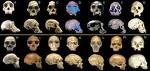
I learned about fossils and how to measure their heads. And what type of fossils they are and what type of head they have. It was very confusing but now I get it.

Thursday, March 17, 2011

Compare and contrast two biomes describe them in detail include pictures of plants and animals you are liklely to see

Tropical Rain Forest

In the Western Hemisphere, the tropical rain forest reaches its fullest development in the jungles of Central and South America.
  • The trees are very tall and of a great variety of species.
  • One rarely finds two trees of the same species growing close to one another.
  • The vegetation is so dense that little light reaches the forest floor.
  • Most of the plants are evergreen, not deciduous.
  • The branches of the trees are festooned with vines and epiphytes (see the photo taken in the Luquillo National Forest of Puerto Rico).


Taiga

The taiga is named after the biome in Russia.
  • It is a land dominated by conifers, especially spruces and firs.
  • It is dotted with lakes, bogs, and marshes.
  • It is populated by an even more limited variety of plants and animals than is the temperate deciduous forest.
  • In North America, the moose is such a typical member that it has led to the name: "spruce-moose" biome.
  • Before the long, snowy winter sets in, many of the mammals hibernate, and many of the birds migrate south.
  • Although the long days of summer permit plants to grow luxuriantly, net productivity is low.


The two biomes have different weathers, animals, and plants.  In the taiga biome their is bears, moose, fox. In the tropical rain forest their is leopards, toucans, monkeys. What the biomes have in common is that they both have animals and plants.

Thursday, March 10, 2011

Blog #6 Which level of a food pyramid is the most important? Support your answer

What is most important on the food pyramid is the fruits vegetables and milk. Because fruit and vegetables are good for you and healthy. Milk helps your bones grow and get stronger.

Thursday, March 3, 2011

There have been 5 major extinction events throughout history, are humans impacting the 6th? Why or why not?

I think humans could be instinct because every living organism can. And also we have found fossils of humans, like teeth, the head, an arm. So humans could be instinct cause they are a living organism.

Thursday, February 24, 2011

Describe the three types of selection: directional, stabilizing and disruptive and give an example of each


A directional selection is a mode of natural selection in which a single phenotype is favored, causing the allele frequency to continuously shift in one direction. Under directional selection, the advantageous allele increase in frequency independently of its dominance relative to other alleles; that is, even if the advantageous allele is recessive, it will eventually become fixed. It stands in contrast to balancing selection where selection may favor multiple alleles, and is the same as purifying selection which removes deleterious mutations from a population. For example smaller individuals and will, if the character is inherited, produce a decrease in average body size. 


A stabilizing selection is a type of natural selection in which genetic diversity decreases as the population stabilizes on a particular trait value. Stabilizing selection commonly uses negative selection to select against extreme values of the character. A example of this is human birth weight. Babies of low weight lose heat more quickly and get ill from infectious disease more easily, whereas babies of large body weight are more difficult to deliver through the pelvis.


A disruptive selection is changes in population genetics in which extreme values for a trait are favored over intermediate values. The variance of the trait increases and the population is divided into two distinct groups. The evolutionary process is believed to be the driving force behind sympatric speciation. For example if rabbits were put into an area that had very dark black rocks as well as very white colored stone, the rabbits with black fur would be able to hide from predators amongst the black rocks and the white furred rabbits would be able to hide in the white rocks, but the gray furred rabbits would stand out in both of the habitats and would suffer greater predation.

Thursday, February 17, 2011

Explain what microevolution is? What are the three ways that variation occurs?

Microevolution refers to any evolutionary change below the level of species. It also refers to changes in the frequency within a population or a species of its alleles (alternative genes). Mutations alter the order of bases in the nucleotides of DNA. Mutations are likely to be rare and most mutations are probably harmful, but in some instances the new alleles can be favored by natural selection independent assortment (recombination of chromosomes that occurs during sexual reproduction) and the Crossing over that happens during meiosis.